The Warehouse Vacancy Crisis Nobody’s Talking About
Dear Reader,
Something unusual happened in India’s industrial real estate market last month. For the first time in over a decade, warehouse vacancy rates across Prime hubs dropped below 5%. If you’re not in the business, that number might seem abstract. But if you’re planning facility expansion in the next 18 months, it’s the most important data point you’ll see all year.
Let me explain why.
When vacancy rates fall below 5%, the market fundamentally shifts from a tenant’s game to a landlord’s game. Suddenly, property owners have pricing power. Rent-free periods shrink. Lease terms tighten. And rental rates start climbing fast—sometimes 15-20% within a single year.
We’re already seeing it. Bhiwandi, Mumbai’s warehousing powerhouse, is sitting at 3.1% vacancy. That’s not a typo. Three point one percent. Chakan-Talegaon near Pune? 4.2%. Oragadam in Chennai? 3.8%.
These aren’t just numbers on a spreadsheet. They represent a supply-demand imbalance that will reshape leasing economics for the next 24-36 months.
What’s Driving This Crunch?
E-commerce is the obvious culprit. In Q1 2026 alone, India absorbed 14.2 million square feet of warehouse space, a 21% jump from last year. But here’s what most people miss: it’s not just traditional e-commerce anymore.
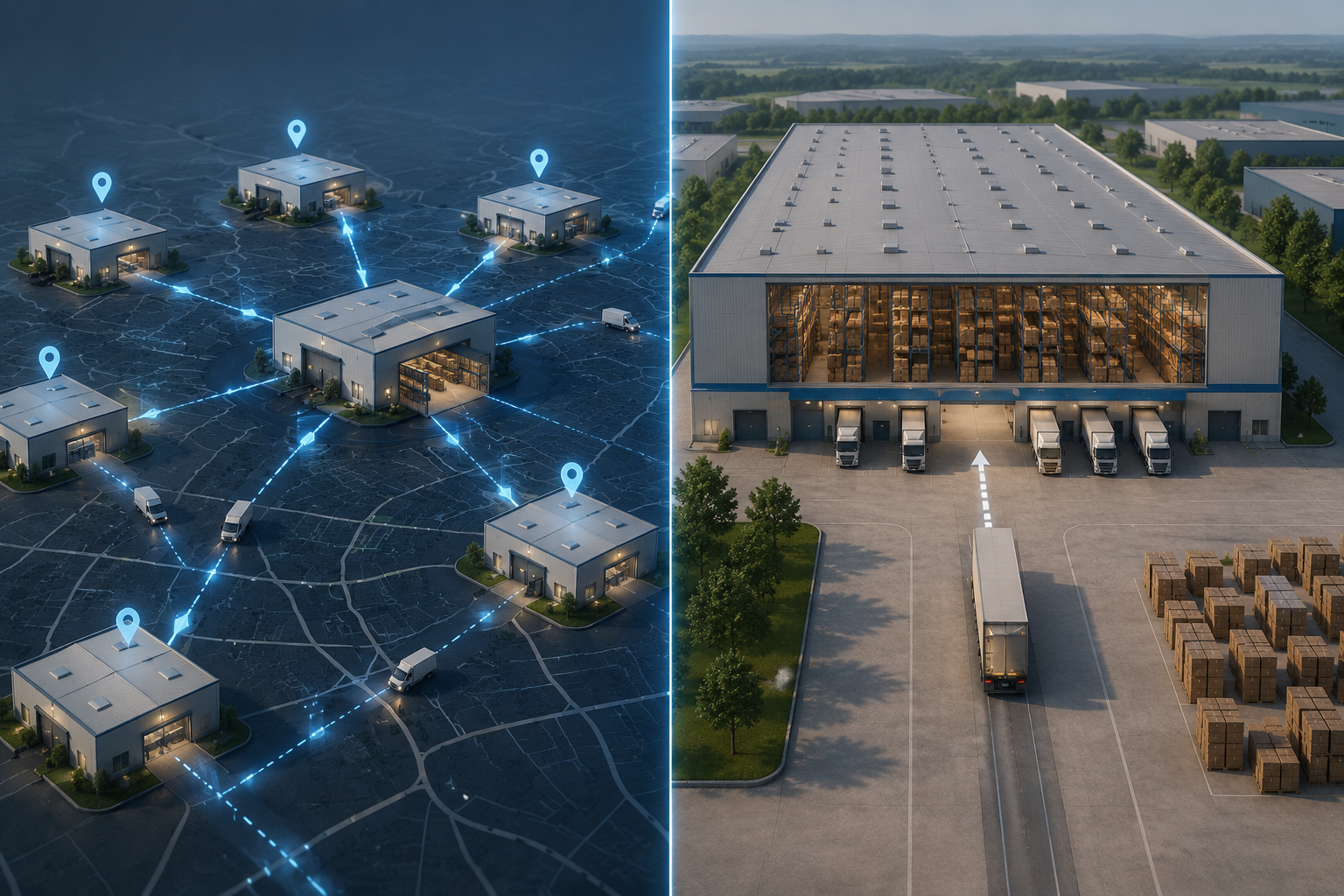
Blinkit, Zepto, and Swiggy Instamart added over 480 dark stores in the first three months of this year. Each one needs 800-1,200 square feet of hyper-local storage. Do the math—that’s nearly 500,000 square feet just for quick commerce in one quarter. And they’re not slowing down.
Meanwhile, Amazon and Flipkart are shifting strategy toward mega-fulfillment centers. We’re talking 500,000 to 800,000 square foot facilities near airport cargo terminals. The goal? Same-day and next-day delivery at scale. The requirement? Massive chunks of strategically located industrial space.
Then there’s manufacturing. Apple’s ₹50,000+ crore investment in Tamil Nadu isn’t just a headline. It’s a warehouse demand multiplier. Every ₹10,000 crore of manufacturing investment requires 2-3 million square feet of supporting logistics infrastructure. Samsung, HP, Dell—they’re all following the same playbook.
The Rental Reality Check
Here’s where it gets expensive for occupiers. Average rental rates in Bhiwandi have jumped 14% year-on-year to ₹32-38 per square foot per month. Chakan-Talegaon is up 11%. Oragadam, 13%. These aren’t gentle escalations—they’re sharp corrections driven by scarcity.
Compare that to emerging hubs. Coimbatore is still at ₹18-23 per square foot. Kochi at ₹16-21. Lucknow at ₹15-20. That’s a 40-45% cost advantage over Prime markets.
But—and this is critical—that arbitrage window is closing. The moment infrastructure completes in these cities (and it is completing), institutional capital floods in, developers pile in, and rental parity begins to narrow.
The Institutional Money Tells the Story
Here’s what convinced me this isn’t a temporary spike: institutional investors deployed $780 million into Indian warehousing in Q1 2026 alone. Blackstone acquired a 2.2 million square foot portfolio for $340 million. ESR India picked up stabilized assets in Chennai and Bengaluru for $185 million. Logos India just raised a $450 million fund specifically for Tier 2 industrial parks.
These aren’t speculative bets. These are calculated allocations by global pension funds and sovereign wealth managers who’ve analyzed India’s e-commerce trajectory, manufacturing renaissance, and infrastructure build-out. They’re pricing in sustained rental growth and vacancy compression for the next decade.
When smart money moves at this scale, individual investors and corporate occupiers need to pay attention.
What This Means for You
If you’re a manufacturer or logistics operator planning 2027 expansion, you have maybe 6-8 months to lock in favorable lease terms before the rental premium kicks in. Waiting for “better deals” will likely cost you 15-20% more in total occupancy expenses.
If you’re an investor evaluating industrial real estate, pre-leased assets in sub-5% vacancy markets are about to see accelerated capital appreciation. The cap rate compression we’re witnessing—Prime Grade-A warehouses now trading at 7.5-8.5% versus 9-10% two years ago—signals strong institutional demand and pricing power.
If you’re a developer, the message is clear: build faster. The demand is real, the pipeline is undersupplied, and the window for premium pricing is wide open.
Looking Ahead
We’re tracking several catalysts for Q2. Budget 2026-27 announcements in April will reveal infrastructure allocations to industrial corridors and any PLI scheme expansions. Eastern DFC Phase 2 sections are commissioning between April and June, unlocking land parcels near Kolkata, Delhi NCR, and the Bihar-UP border.
Amazon and Flipkart are expected to announce 3-5 million square feet of new fulfillment center commitments for FY27. The cities they choose will become instant demand hotspots.
And Brookfield and Embassy REITs are preparing 2-3 major logistics acquisitions in Q2. The cap rates they’re willing to pay will signal where the market is truly headed.
A Quick Note on Visvasa’s Moves
We just secured 42 acres in Hosur, right on the Tamil Nadu-Karnataka border. It’s positioned along the Bengaluru-Chennai Industrial Corridor with direct proximity to Bengaluru’s electronics manufacturing ecosystem. Expected delivery: Q4 2026 for Built-to-Suit clients in automotive and electronics.
We’re also opening our Coimbatore Logistics Park for co-investment. Phase 1 is 180,000 square feet, pre-leased to a leading 3PL operator on a 9-year contract with 7% annual escalations. Minimum investment is ₹25 lakh with an expected Year 1 yield of 8.2% and a target IRR of 14-16%. If you’re an investor looking at industrial real estate allocation, reach out for the investment deck.
Final Thought
Markets don’t send clearer signals than this. Sub-5% vacancy. Double-digit rental growth. Institutional capital flooding in. Manufacturing shift accelerating. E-commerce demand exploding.
The question isn’t whether industrial real estate will perform. It’s whether you’re positioned to capture it.
If you want to discuss your expansion strategy, evaluate co-investment opportunities, or just talk through the data, we’re here.