December 2025 marked a decisive shift in global logistics thinking. For years, the industry chased speed—faster deliveries, tighter SLAs, leaner inventories. But recent months revealed a new truth: resilience has replaced speed as the real competitive advantage.
Even as select shipping lines cautiously tested Red Sea routes after prolonged disruptions, most global supply chains did not rush back to old assumptions. Instead, companies redesigned networks to handle uncertainty as the norm. Volatility is no longer an exception—it is the baseline.
Red Sea Signals: Normalisation Without Confidence
Limited Red Sea transits resumed, but shippers treated them as optional scenarios, not permanent solutions. This shift reflects a broader industry mindset: logistics networks must be designed to absorb shocks, not depend on stability.
Overcapacity Returns—But Discipline Remains
Pandemic-era vessel orders are now fully deployed, bringing capacity back into the market. However, unlike earlier cycles, this has not triggered aggressive rate wars. Instead, shippers are prioritising flexibility, route optionality, and buffer capacity.
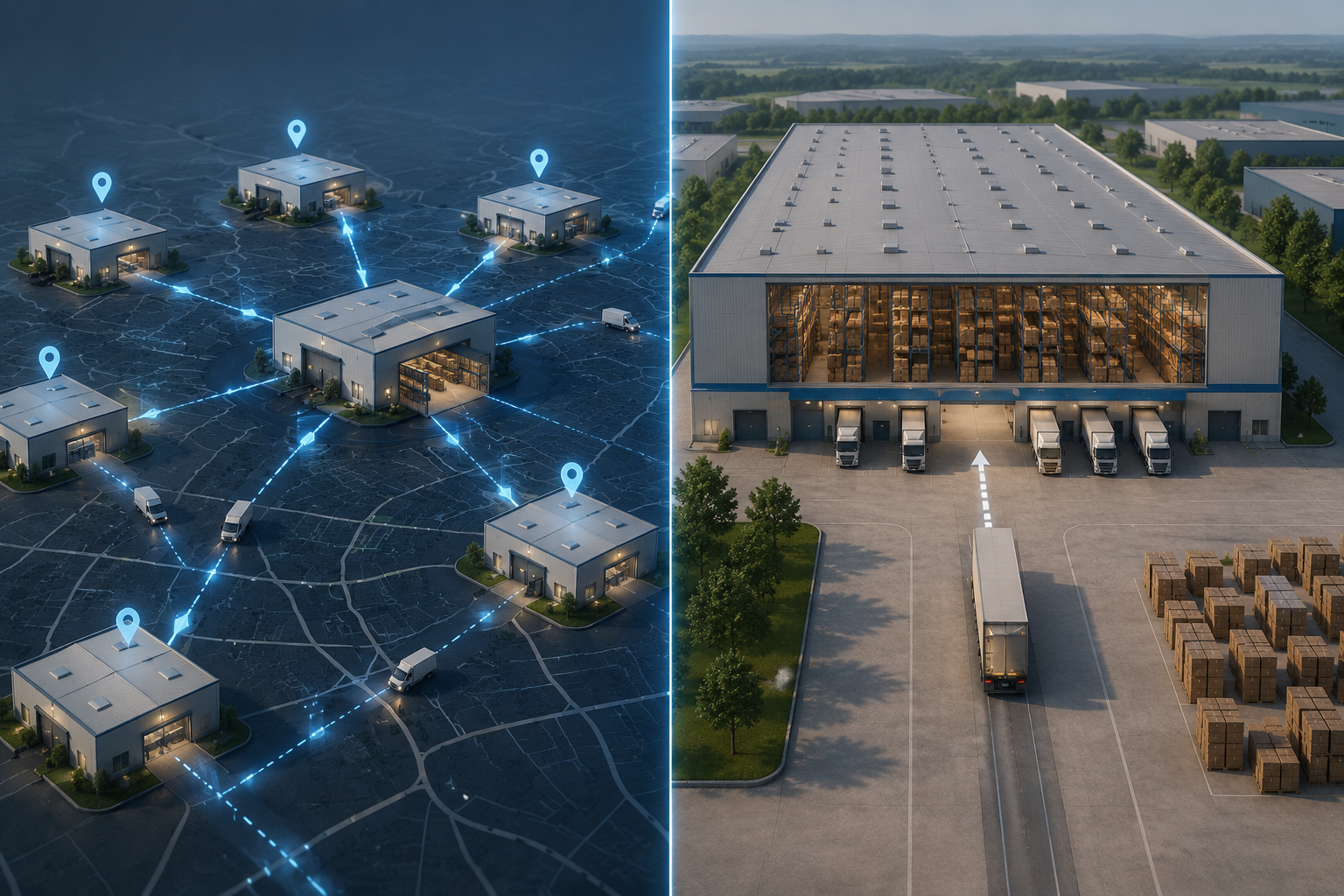
This discipline is visible in real estate decisions as well. India’s industrial and warehousing leasing reached 36.9 million sq ft in 2025, a 16% year-on-year increase, driven by 3PL, engineering, and e-commerce players (Economic Times, Dec 2025). Demand is shifting toward adaptive, compliant, corridor-aligned assets, not speculative scale.
India’s Logistics Momentum Is Structural
India’s progress is no longer cyclical. Integrated planning under PM Gati Shakti, Dedicated Freight Corridors, and port reforms are structurally reducing inefficiencies. India’s logistics cost has now fallen to 7.97% of GDP, crossing a critical threshold toward global benchmarks (Cargo Insights, Dec 2025).
This signals a deeper transformation: global supply chains are no longer asking whether India can scale—but where in India they should scale.
Digital and Green Logistics Reinforce Resilience
Resilience is no longer only physical. According to recent global research, AI-driven logistics optimisation can reduce emissions by 10–15% while improving routing, warehouse efficiency, and asset utilisation (Reuters / World Economic Forum, Jan 2026).
Actionable Takeaways
• Design supply chains for disruption, not stability
• Prioritise Grade-A, compliant, connected logistics assets
• Treat logistics real estate as infrastructure, not property
Visvasa Insight:
Resilience is built before disruption arrives. Visvasa develops connected logistics parks designed for long-term stability in an uncertain world.